

Natural allies: Beneficial insects for agriculture
Beneficial insects play an important role in increasing agricultural production and protecting crops. These insects naturally help in controlling harmful insects, assist in pollination and increase soil fertility. Excessive use of chemical pesticides harms the environment, but organic farming can be promoted by conservation and use of friendly insects.
Let us know about friendly insects for the fields.
Types of beneficial insects and their role
1. Pollinators
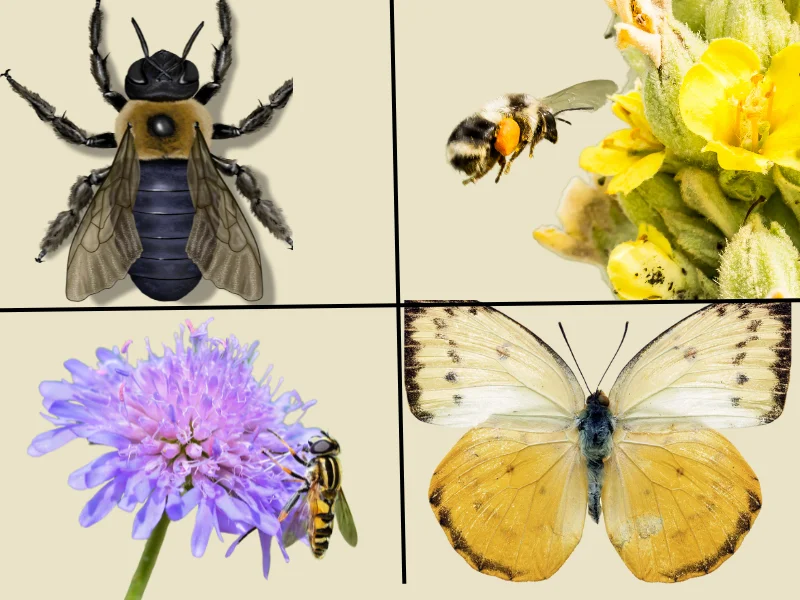
Pollination is one of the most important processes in nature, through which the reproduction process of crops and plants takes place. Pollinating insects promote this process naturally and increase the yield of crops.growth These insects take pollen from flowers and transfer it to the stigma of other flowers, thereby completing the process of formation of fruits and seeds.
Main pollinating insects
- Honeybee (Apis spp.) – The most important pollinator. It contributes to the production of sunflower, mustard, fruits, and vegetables.
- Butterflies (Butterflies – Lepidoptera Order) – Colorful butterflies increase the productivity of crops by taking pollen from flowers.
- Bumblebee (Bombus spp.) – Helps in pollination of tomatoes, strawberries and other crops.
- Flies (Hoverflies – Syrphidae) – These flies also help in pollination like bees.
2. Predatory Insects

Predatory insects help to naturally control pests that harm crops. These insects by eating harmful insects limit their numbers, so that farmersReduced use of chemical pesticidesThese insects play a very important role in organic farming and natural agriculture.
Main prey insects
- Ladybird Beetle (Ladybug – Coccinellidae) – It protects crops by eating small aphids, thrips and mites.
- Dragonfly (Odonata Order) – Controls mosquitoes and other harmful insects.
- Praying Mantis (Praying Mantis – Mantodea Order) – It feeds on large harmful insects such as grasshoppers, caterpillars, and flies.
- Lacewing (Chrysoperla carnea) – Its larvae feed on aphids, thrips, and small insects.
3.Parasitic Insects

Parasitic insects are an important part of natural biological control. These insects lay their eggs in the body of harmful insects or destroy them by getting nutrition from them. This process helps in controlling the number of harmful insects, which leads to the spread of pests.Reduces the need for chemical pesticidesAnd organic farming gets a boost.
Main parasitic insects
- Braconid Wasps (Braconidae Family)– These wasps lay eggs inside the bodies of caterpillars (Lepidopteran Larvae), aphids, and locusts. Their larvae destroy harmful insects by slowly eating them. They are helpful in controlling harmful insects in crops like cabbage, tomato, and cotton.
- Trichogramma Wasps (Trichogrammatidae Family)– These tiny wasps lay eggs inside the eggs of moths and butterflies, thereby reducing the number of harmful insects. They are highly beneficial in paddy, wheat, cotton and chilli cultivation. These insects are especially used to control Fall Armyworm, Stem Borer, and Diamond Back Moth (DBM).
- Tachinid Flies (Tachinidae Family)– These flies lay eggs in the body of grasshoppers, aphids, cutworms, and caterpillars. Their larvae destroy harmful insects by eating them from inside. They are extremely useful in the cultivation of vegetables, pulse crops and paddy.
4. Beneficial Insects in Organic Waste Management

Insects helpful in organic waste management play an important role in keeping the environment clean and healthy. These insects accelerate the process of natural recycling by decomposing garbage, dead organisms, plant remains, and food waste. These insects not only increase the fertility of the soil but also help in proper disposal of waste materials.
Main Waste Management Pests
- Black Soldier Fly (Hermetia illucens)– Black soldier fly larvae rapidly decompose kitchen waste, dung, and other organic waste. Their larvae can reduce food waste by 60-70% and turn it into high-quality compost. Their dried larvae are used as a natural protein-rich diet for poultry and fish.
- Dung Beetle (Scarabaeidae Family)– Dung beetles help in making natural fertilizer by mixing animal dung with the soil. They increase the fertility of the soil and reduce the number of harmful flies. These insects are extremely useful in cowsheds, animal husbandry centers and farms.
- Earthworm (Eisenia fetida, Lumbricus rubellus) – Earthworms convert organic waste into high-quality vermicompost. It increases the water holding capacity and fertility of the soil. Vermicompost is considered an invaluable resource in organic farming and natural agriculture.
Conclusion
Beneficial insects for agriculture play an important role in maintaining the balance of the natural ecosystem. These insects help in controlling harmful insects, promoting the process of pollination, organic waste management, and increasing soil fertility.
If farmers use less chemical pesticides and adopt organic farming, these beneficial insects can flourish in greater numbers, which will maintain crop productivity, quality and environmental sustainability. By protecting these insects, we can get more yield at less cost and take an important step towards sustainable farming.
Leave a Reply
Want to join the discussion?Feel free to contribute!