
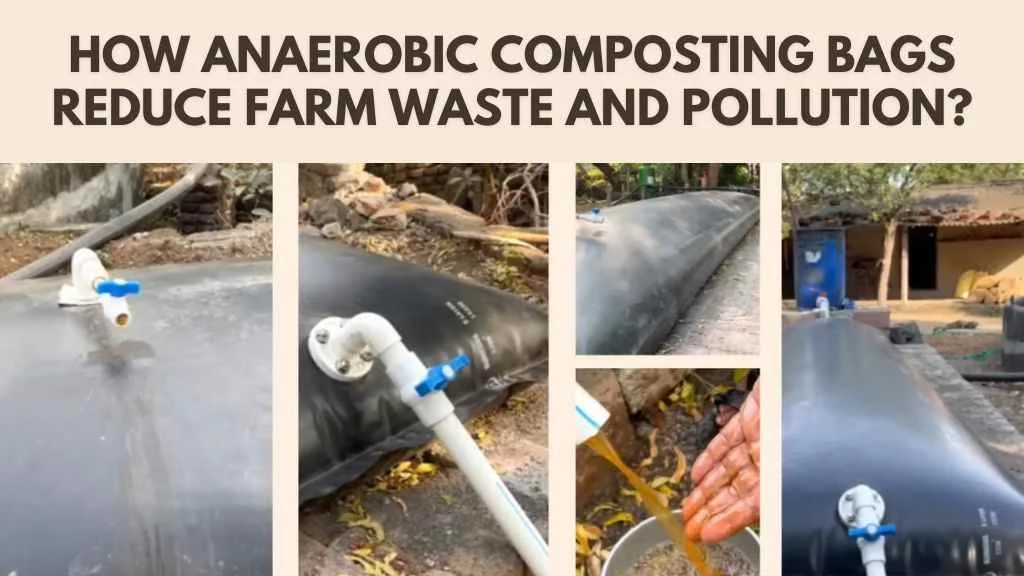
How Anaerobic Composting Bags Reduce Farm Waste and Pollution?
In today’s world, one of the biggest challenges farmers face is the management of farm waste. Crop residues, cattle dung, and kitchen waste often pile up and either get burnt or dumped, causing pollution and harming the environment.
But there’s a simple, eco-friendly solution: Anaerobic Composting Bags. These innovative bags not only manage waste but also turn it into valuable organic fertilizer, helping both the farmer and the environment.
What is Anaerobic Composting?

- Anaerobic composting means decomposing organic waste without oxygen.
- In an anaerobic composting bag, waste like dung, crop residue, or food scraps is sealed inside.
- Microbes break down this waste slowly, producing:
- Organic compost
- Nutrient-rich liquid fertilizer (compost tea)
- Less smell and flies compared to open composting
It’s a controlled, clean, and efficient way of turning waste into wealth.
How It Reduces Farm Waste
-
Crop Residue Management
- Instead of burning leftover straw, husk, or crop waste, farmers can put it into composting bags.
- This prevents air pollution and creates natural manure.
-
Cattle Dung Utilization
- Tons of cow dung usually go unused or create a mess.
- In anaerobic bags, dung turns into high-quality bio-fertilizer.
-
Kitchen Waste Recycling
- Farmers and households can recycle vegetable peels, fruit waste, and leftovers.
- No waste goes to landfill — it goes back to the soil.
How It Reduces Pollution
-
Prevents Air Pollution
- Stubble burning is a major cause of smog.
- By composting residues instead of burning them, farmers reduce air pollution.
-
Protects Soil from Chemicals
- Composting bags provide natural fertilizers, reducing dependence on harmful chemical fertilizers.
- This keeps the soil fertile and free from toxic build-up.
-
Reduces Water Pollution
- Chemical fertilizers often leach into groundwater and rivers.
- Compost tea from anaerobic bags enriches the soil without polluting water.
-
Low Carbon Emissions
- Anaerobic composting locks carbon into the soil instead of releasing it into the air.
- This makes farming more climate-friendly.
Benefits for Farmers
- Cost-effective: No need to buy expensive fertilizers.
- Soil enrichment: Increases soil organic matter and fertility.
- Pest resistance: Compost tea helps crops fight pests naturally.
- Eco-friendly image: Farmers practicing zero-waste farming gain more trust in the organic market.
Final Thoughts
Anaerobic composting bags are more than just a waste solution, they are a step towards sustainable, zero-waste farming. By using these bags, farmers not only reduce waste and pollution but also create their own organic fertilizer and liquid manure at a very low cost.
One small step of composting can lead to a cleaner environment, healthier soil, and pollution-free farming future.
Bag requirements 10×9×9