
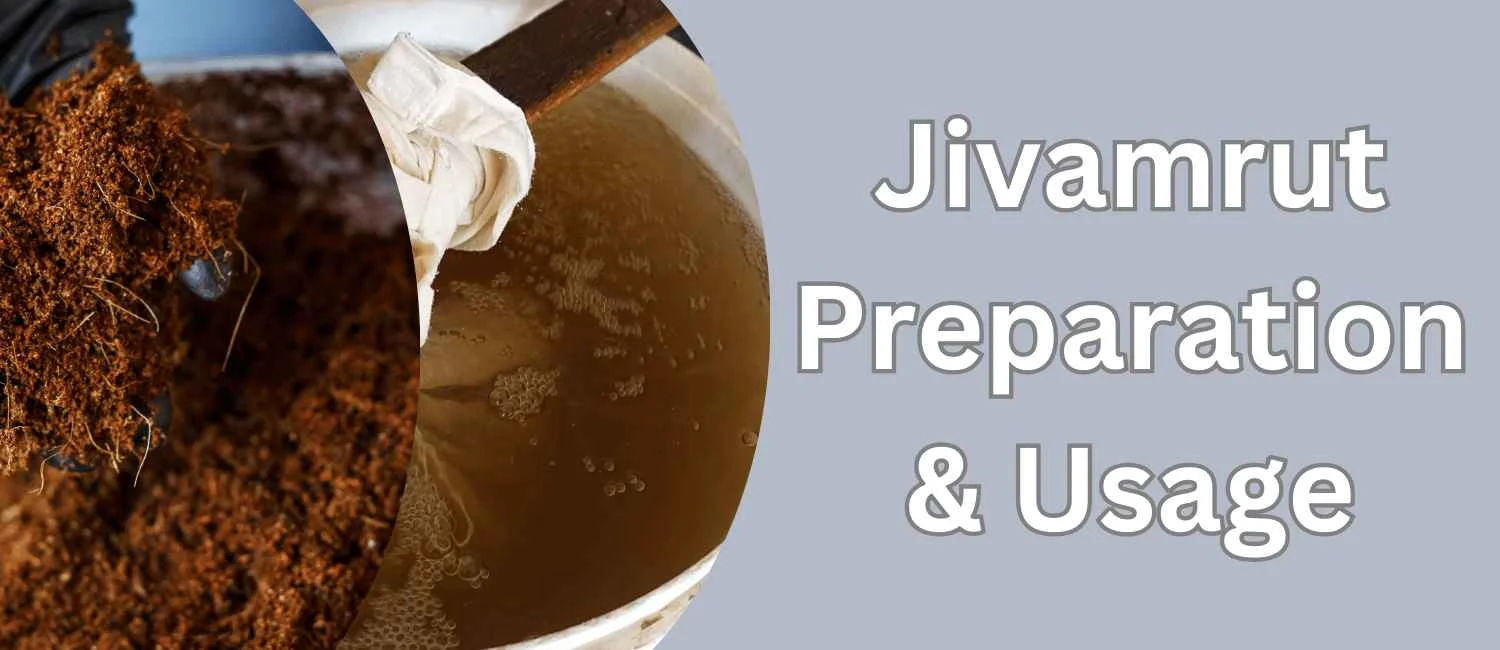
How to Prepare & Use Jivamrut: Complete Guide
Jivan (Life) + Amrut (Medicine) = Jivamrit (Medicine for tiny living things in soil that helps soil fertility and plant growth.)
Types of jeevamrutham: Solid & Liquid.
Learn about jeevamrutha or Jivamrit, a special way to take care of plants, shared by a respected farmer named Subhash Palekar. This method is called Subhash Palekar Natural Farming (SPNF), which used to be called father of Zero Budget Natural Farming (ZBNF).
Also, Get to know about its origin, preparation, benefits, practical tips on incorporating it into your farming routine, Disadvantages, Precautions, Effect on crop and Farmers reviews.
This method says big “no” to using any chemical fertilizers or pesticides. Support “prakrutik kheti”
What is Jivamrut
It is a nutrient-rich fertilizer derived from a combination of cow dung, cow urine, jaggery, gram flour, jungle soil and water.

Origin:
It is derived from the ancient Indian science of farming called “Vedic Farming,” which emphasizes the use of organic materials and natural processes to nourish the soil and plants. The term “Jivamrut” itself translates to “elixir of life for plants,” highlighting the rejuvenating properties of this organic fertilizer.
Have a look on Advance Jivamrut: organic hydroponic liquid fertilizer made in composting bag
How to prepare Liquid jivamrit
***The quantity of materials makes jiv amrut & Ghan Jivamrut for 5 bigha (1.5 acres) of land.***
| Jeevamrut Ingredients | Quantity |
|---|---|
| Cow Dung | 10 kg |
| Jaggery or Fruit Flesh | 1 kg |
| Gram or Any Pulses Flour | 1 kg |
| Cow Urine | 8-10 ltr |
| Water | 200 ltr |
| Farm Ridge or Forest Soil | 50 gm |
Jivamrut Preparation:

Step 1: Take a tank and add 200 liters of water.
Step 2: Add above ingredients in the tank and stir it in a clockwise direction for 2 to 3 minutes.
Step 3: Cover it with clean cloth and put it under a tree shadow for 72 hours. ( Meanwhile you must stir it 2 times in a day followed by a clockwise direction.)
Step 4: Jivamrut is ready to use (You need to filter it through clean cloth for separating solid waste).
This powerful concoction is packed with essential minerals and beneficial microorganisms that promote healthy root development, increase nutrient absorption and boost overall plant growth.
Shelf life
10 Days (You must use this liquid fertilizer before 10).
How to Use Jivamrut Effectively
Here’s a step-by-step guide on how to incorporate liquid jivamrit into your farming routine:
Dilute: Start by diluting it with water.
How much jivamrit in water?
The recommended ratio is 1 part Jivamrutha to 10 parts water for general use. However, you can adjust the dilution ratio based on the specific needs of your plants and soil conditions.
Apply to Soil: Once diluted, apply it to the soil around your plants. Use a watering can or sprayer to evenly distribute the liquid. Ensure that the soil is adequately moist to facilitate nutrient absorption.
Foliar Spray: Works as pesticide. In addition to soil application, It can also be used as a foliar spray. Simply spray the diluted solution onto the leaves of your plants, keep in mind to cover both the upper and lower surfaces. This allows the plants to absorb nutrients directly through their foliage.
Frequency of Application: The frequency of it’s application depends on the growth stage of your plants.
During the initial stages, when the plants are young and establishing their roots, it’s beneficial to apply liquid fertilizer every 7-10 days.
As the plants mature, you can reduce the frequency to once every 15-20 days.
However, it’s important to monitor your plants and adjust the frequency based on their specific needs. Regular application of Jeevamrut throughout the growing season will ensure continuous nutrient supply and healthy plant growth.
Avoid Overuse: While Jivamrut is a natural fertilizer, it’s important not to over apply it. Excessive use can lead to nutrient imbalances and may negatively impact plant health.
Follow the recommended dilution ratio and application frequency to ensure the best results.
Benefits of Using Jivamrut
Enhanced Soil Health: It improves soil fertility by enriching it with essential nutrients and organic matter.
The organic matter in Jivamrut provide a balanced nutrient supply without the harmful chemicals found in synthetic fertilizers. This promotes the growth of beneficial microorganisms in the soil, which help break down organic matter and release nutrients for plants to absorb.
Improved Plant Nutrition: The nutrient-rich composition ensures that plants receive a well-rounded supply of essential minerals. This helps prevent nutrient deficiencies and promotes robust growth. The beneficial microorganisms in Jivamrit also enhances nutrient absorption by improving soil structure and root development.
Increased Yield and Quality: By providing plants with optimal nutrition and supporting healthy growth, It can lead to increased yield and improved crop quality. Plants grown with Jivamrut have been observed to produce larger fruits, vibrant flowers, and healthier foliage.
Environmentally Friendly: Unlike synthetic fertilizers, Jivamrut is completely natural and does not contain any harmful chemicals that can leach into the soil or waterways. It is a sustainable and eco-friendly choice for farmers who are conscious about the environment.
Disadvantage of Jivamrut
- It’s made from animal remains, so it has a strong odor naturally.
- The liquid remains effective for only 10-12 days, after which its potency diminishes.
How much liquid Jivamrut do I use per acre?
Jeevamrutha application rate: Mix 13 liters of water + 200 liters of Jeevamrut for 1 acre. You can spray it on your soil or use it directly through dhori or drip. Spray this liquid ferilizer over a 21-day time period.
Also read go krupa amrutam, panchgavya khad here —> natural liquid fertillizer making with cost calculation infographic.
How to make Ghan Jeevamrut:

| INGREDIENTS | QUANTITY |
|---|---|
| Cow Dung | 100 kg |
| Jaggery or Fruit Flesh | 1 kg |
| Gram or Any Pulses Flour | 1 kg |
| Cow Urine | As Needed |
| Farm Ridge or Forest Soil | 50 gm |
Ghan Jivamrit Preparation:

Step 1: Mix all the above mentioned matter properly. Gradually add cow urine as needed until the mixture is ready to form a ball (cow dung ball).
Step 2: Keep the mixture in the shade for 48 hours. thereafter dry it in the sun.
Step 3: Break down the cow dung patties with a stick and strain it through a sieve. store it in a sack.
Usage
It can be spread directly to the field. Or in the area of soil where it needs more fertility.
Shelf Life
Up to 1 year.
After few years of use, you can notice these changes in land:
By regular application of Jeevamrut, you’ll see increased natural carbon in your soil. You land will get better with more organic stuff, and you’ll notice more earthworms and tiny helpful creatures in it.
Jivamrut Ingredients and Their Benefits
Cow Dung: Cow dung is rich in organic matter, essential nutrients, and beneficial microorganisms. It improves soil structure, enhances water retention, and provides a slow-release source of nutrients for plants.
Cow Urine: Cow urine is a potent source of nitrogen, potassium, and other trace elements. It acts as a natural growth stimulant, promotes root development, and enhances nutrient absorption.
Jaggery: Jaggery, derived from sugarcane or palm sap, serves as a food source for beneficial microorganisms. It aids in the proliferation of these microorganisms in the soil, which, in turn, improve nutrient availability for plants.
Gram Flour: Gram flour, also known as besan, contains high levels of phosphorus and potassium. These essential nutrients support flowering, fruiting, and overall plant vigor.
Water: It acts as a carrier for the other ingredients, ensuring their effective distribution in the soil and absorption by plants. It also contributes to maintaining soil moisture levels, which is crucial for plant growth.
The combination of these ingredients creates a synergistic effect, providing plants with a well-rounded nutrient supply and creating an environment conducive to beneficial microbial activity.
Jivamrit Testimonials and Success Stories
Many farmers have experienced remarkable results. Let’s take a look at some testimonials and success stories to understand the potential of this organic fertilizer.
Testimonial 1

Smt. Rani of Andhra Pradesh
In a 1 acre field, 200 kg of Ghanajivamrit. Also, used Type 2 Ghanajivamrit and Beejamrit for seed.
Here is what she get:
- She harvested healthy crops like cowpea, foxtail, and bajra.
- Earned a total income of Rs 33,710 from the harvest.
- Spent Rs 4,800 for cultivation purposes.
- Her net income after expenses was Rs 28,910.
- She expects an additional Rs 5,000 from the standing crops on her farm.
- By maintaining a year-long green cover on fields.
- Improved soil quality observed, including better water-holding capacity.
- Noticed increased soil porosity due to the green cover.
Source: Andhra Pradesh Zero Budget Natural Farming Programme, Government of Andhra Pradesh
Testimonial 2

Story of Narvanbhai Khatabhai Gohil of Gujarat
Banana fruit was planted with the use of liquid Jivamrit. He also used Ghanjivamrit, Nimastra(as pesticide), and Daspraniark. The seeds were treated with Beejamrit.
The Result:
- Profitable practice due to cost savings.
- Softens the soil for easier cultivation.
- Increases soil organic matter content.
- Enhances quality production of bananas.
- Leads to increased retail selling of bananas.
Source: https://naturalfarming.niti.gov.in/farmers-success-stories
These testimonials give us a glimpse into the positive impact Jivamrut & ghamjeevamrit can have on different types of gardens and farms.
Comparison of Jivamrit with Other Similar Fertilizer
When it comes to organic fertilizers, there are several options available in the market. Let’s compare jeevamrut with some other popular products to understand its unique advantages.
Jivamrut vs. Compost

Compost is a widely used organic fertilizer made from decomposed organic matter. While compost provides essential nutrients to plants, it takes time to break down and release those nutrients into the soil. On the other hand, jivamrut is a liquid fertilizer that is quickly absorbed by plants, providing them with an instant nutrient boost. Additionally, it contains beneficial microorganisms that improve soil health, which compost may lack.
Jivamrut vs. Chemical Fertilizers

Chemical fertilizers are widely used for their quick results, but they come with harmful side effects. They can damage the soil structure, pollute water sources, and harm beneficial organisms. Jeevamrut, being an organic fertilizer, is safe for the environment and promotes sustainable farming practices. It nourishes the soil, improves its fertility, and supports a balanced ecosystem.
Conclusion
Incorporating jivamrit into your farming routine can provide numerous benefits for your plants and the environment.
- If you prefer not to go through the hassle of preparing, filtering, stirring it, you can switch to using a composting bag.
- when given to the soil jivamrut takes time for breaking down bio-organic matter in the soil, and then plants absorb the nutrients. Though this process takes some time.
- Composting bag completes breaking down bio-organic matter process inside a bag, and when liquid applied to the field, it begins working instantly. So the name of output khad is advance jivamrut.
With Jivamrut+composting bag based advance jivamrit, you can achieve healthier plants, higher yields, and a more sustainable approach to farming.
Start using it today, Your plants will thank you for it! ;)
Please introduce method of day to day preparation for 500 cow gaushala. Particularly Jivamrut and Ghanji amrut.
Yes sure
मी एडवानस जीवामृत बेग लावली आहे मी पुर्ण जैविक शेती 4 वर्षे पासून करत आहे
Jai Gau Mata! Jankari ke liye yaha call kare: 7211130451